WHAT WE’RE TALKING ABOUT


It Matters.

What’s worse: writing and publishing an opinion piece that may have consequences, OR being inconsequential?

This question loomed in front of me and 19 of my new Ford Public Voices Fellows as we kicked off our year-long program with The OpEd Project to ensure our ideas help shape the important conversations of our age. I’m joined with some of our nation’s top thinkers working in economic and social justice.
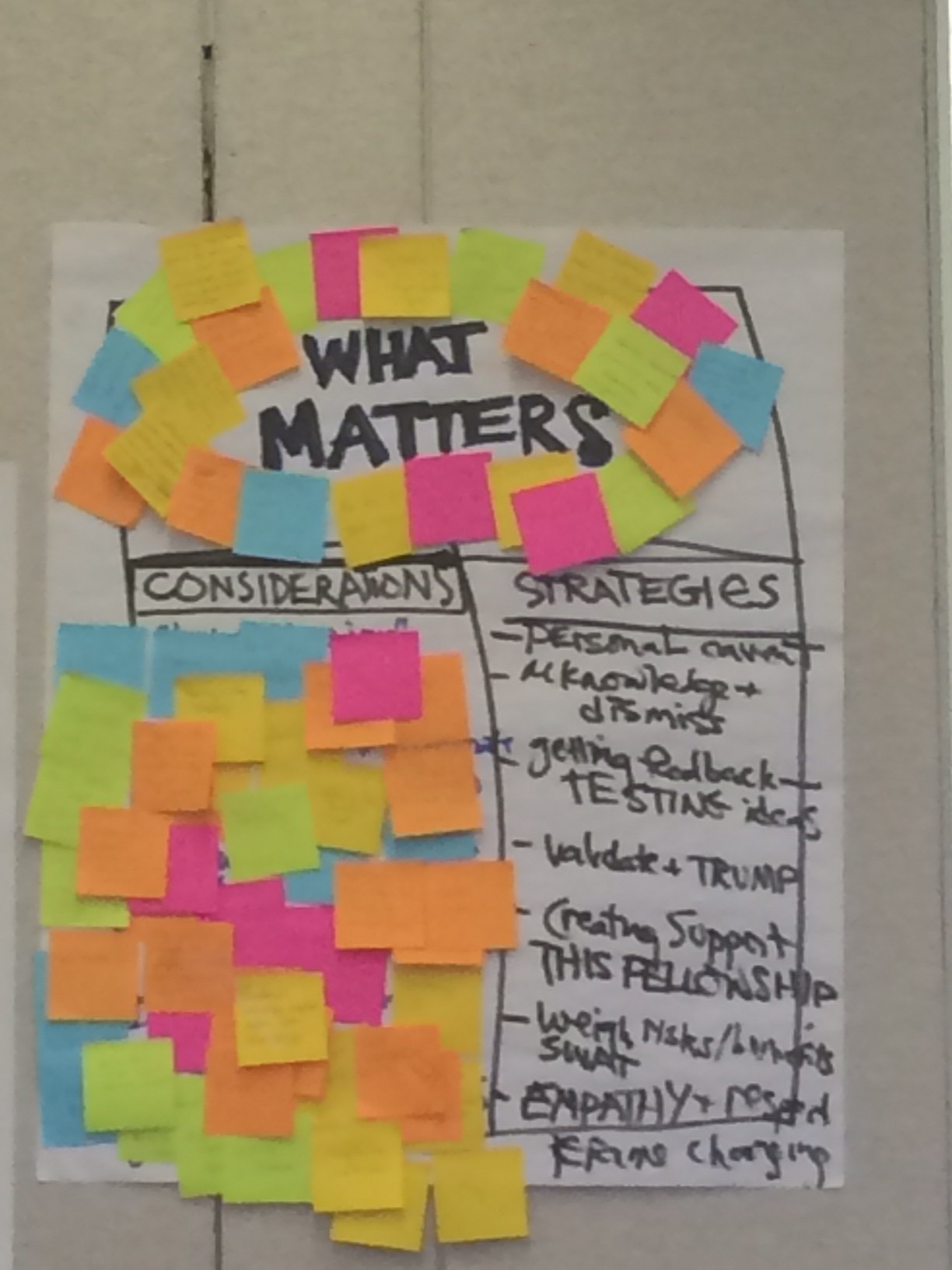
photo 2

Despite their top-notch thinking, individuals like my fellow fellows are often underrepresented in main stream media and public debate.  The root problem is not a lack of knowledge or experience, but a culture in which minority voices (especially women) rarely have the inside information, high-level support and inside connections to become influential on a large-scale.

Well, it’s time to change that!  But how do we do that?  Is it straight forward?  After the past 12 hours together, I’ve concluded that it actually isn’t!  In fact, there are many considerations that run through our minds before putting pen to paper.  Do I have the time?  Will this have impact?  And strikingly, will this have consequences?  Consequences can include formidable things like lack of safety, polarization, termination of funding.  So that leads fellows like us and others like us, making measured decisions. 

Is it worth it?  Absolutely.  Because we believe that not sharing our expertise will have more negative consequences than not doing anything at all.

Get ready to read this space!

#climbforSHE Bella Wiener takes top honors

#climbforSHE campaign founder Bella Wiener was recently acknowledged as a young game changer at the recent MUSE Women’s Conference in Bend, OR. Bella shared the stage at the 3-day conference with Myrlie Evers-Williams, Daphne Zuniga, and other female catalysts for change. The following week, Bella won the Young Hero Award by the Bend Chamber of Commerce’s Women of the Year Awards. Bella’s adventurous spirit serves as an inspiration to many!

Health and Hygiene Manager Nadia Hitimana kicked off our initiative to train primary school teachers about menstrual health and hygiene management with 50 teachers from the Eastern District of Rwanda.

Teaching the ABCs about Menstrual Hygiene

Guest post by Nadia Hitimana, Health and Hygiene Manager, Rwanda

Our main goal of our teacher’s training initiative is to provide accurate information about menstrual hygiene management, or MHM. Education has always been our first step in breaking the silence and taboos about menstruation. We’re starting with teachers, whom will then train other staff members and key student leaders. This multiplier effect will then spread into the communities.

We began with a group of 50 teachers in November, and our objectives were (1) to increase teachers’ knowledge and skills about MHM; and (2) to equip teachers to train our MHM curriculum with their students.

Teachers deeply appreciated our training program. Our curriculum covered the gamut of health knowledge and related topics. The teachers were receptive, yet prevailing myths and taboos still came up as points of contention. I couldn’t believe it when one teacher still was not convinced that some women should be farming when menstruating.

Another teacher, however, expressed a new sense of admiration for his wife after learning about the menstrual cycle. “I am ashamed for blaming her about not being able to control the number of pregnancies she has had. I can’t imagine how confusing and stressful it must be for her and other women who are not informed.”

Our work with the 50 teachers continues throughout this year. We will continue to work with these teachers throughout 2015 so they can be effective MHM education trainers at their schools.

Stay tuned as we share more about our work with teachers this year!