Being a Part of a Global Community

Post by Sylvere Mwizerwa, Business Development Officer, SHE Rwanda

I would like to first express my words of thanks to Barry and Dolly Segal and their family for their support of SHE and sub-Saharan Africa initiatives.

The Segal Family Foundation’s annual conference was wonderful and unique. I learned the best and polite ways to ask professional questions in front of a crowd of people with different backgrounds.  The conference helped me to grow as a person!

I met many like-minded people that do similar work that we do.  Michael Wilkerson, the CEO of Tugende, a moto transportation company in Uganda, shared helpful advice on how to approach governments when it comes to reducing taxes and forming public-private partnerships.

For example, Dr. Laura Stachel from We Care Solar, a social enterprise that distribute solar boxes to countries in Africa and Asia, personally taught me how she was able to form successful partnerships with government institutions. We Care Solar has partnerships with Ministries of Health and Ministries of Education which has helped them to distribute their products to hospitals and clinics at a lower price. Her model is amazing and is very similar to ours.

As the Business Development Officer, I am focused on reducing our supply chain and production costs. It was great to therefore meet Robina Sarah Naluwooza from Set Her Free from Uganda who recommended to potential new suppliers. This will help SHE Rwanda to drive down our costs during our operations.

The speeches, plenary sessions and lunch table discussions were really good opportunities to share our thoughts and discuss in large the challenges that we are facing and the way to solve these. I have formed a strong network among all types of social entrepreneurs.

Itoro, a SUNY Binghamton rising senior, worked at SHE Global this summer.

Meet SHE Intern: Itoro Chloe-Udo

Hometown: I was born in Vancouver, Canada but moved to New York City at a young age.  I am now currently living in Yonkers.

What are you working on? For SHE, I am currently working on a SHE Goes to School project in which our current #smallthings and SHE 28 campaigns would be more involved on colleges campuses. Through this project, SHE would like to go to school and get help from girls like myself who share these same ideals that highlight the importance of dignity and accessible hygiene for all.  I am also making the most of my summer and enjoying spending time with my friends and family and preparing for my senior year of college.

What superpower would you have? I would be able to fly. I can imagine that there must be no greater feeling of absolute freedom.

Who is your favorite volleyball player? Megan Hodge. She’s an all-American player with exceptional skills both on and off the court.

What was the last song that played on your iPod/iPhone/iPad? I’m Not the Only One by Sam Smith. I absolutely love him!

Why did you join SHE? I have always had an affinity for helping others, especially those whose potential is usually overlooked. Everyone that knows me can tell you that I ALWAYS root for the underdog. So when I first found out about SHE, I was instantly locked in and engaged because of what SHE represents.  SHE can be me – spicy and provocative, yet educational and motivational. As a young woman of Nigerian descent, I especially feel a close tie to the work SHE is doing with young girls and women in Rwanda.  SHE is sending the message that not only do small things make a difference but that education IS power. It’s rewarding for me to be part of a team who believes that it is not solely about charity; we have to get out there and do something!

Meet SHE Intern: Harriet Fisher

Hometown: I was born and raised in Brooklyn, New York, but I spend most of the year at school in beautiful Brunswick, Maine.

What are you working on? I am working to organize and catalog the many, many articles and resources SHE team members access. The project has allowed me to read about the incredible work professors, NGOs, governments, and everyone in between are doing to improve menstrual hygiene management.

I am also scooping ice cream at a local Brooklyn shop, working on my parallel parking, and hiking in the White Mountains.

What’s your favorite flavor of ice cream?

Chocolate Chocolate Chunk with hot fudge. Bring on the chocolate.

What superpower would you have?

Perhaps it’s trite, but I would love to fly. To be able to soar over the Grand Canyon, Angkor Wat, Shanghai? Yes, please!

What was the last song you played on your iPhone?

All About that Bass by Meghan Trainor

Why did you join SHE?

I recently took in a course on NGOs in politics in which we discussed the problematic ways in which non governmental organizations provide deeply patronizing aid. I joined SHE and admire SHE’s work because of its commitment to a product that enables women to support themselves. SHE’s goal is not to create dependence on foreigners, but rather to great independence for the many women in Rwanda who lack access to something so basic: a pad.

Meet one of our ten pilot schools: Gs Gikaya

Gs Gikaya is one of the 10 schools that will be buying our pads during our industrial-scale pilot.  It’s considered one of the model schools with girl-friendly sanitation facilities compared to many of the schools we have visited. This school is also renowned also for their warm welcoming.

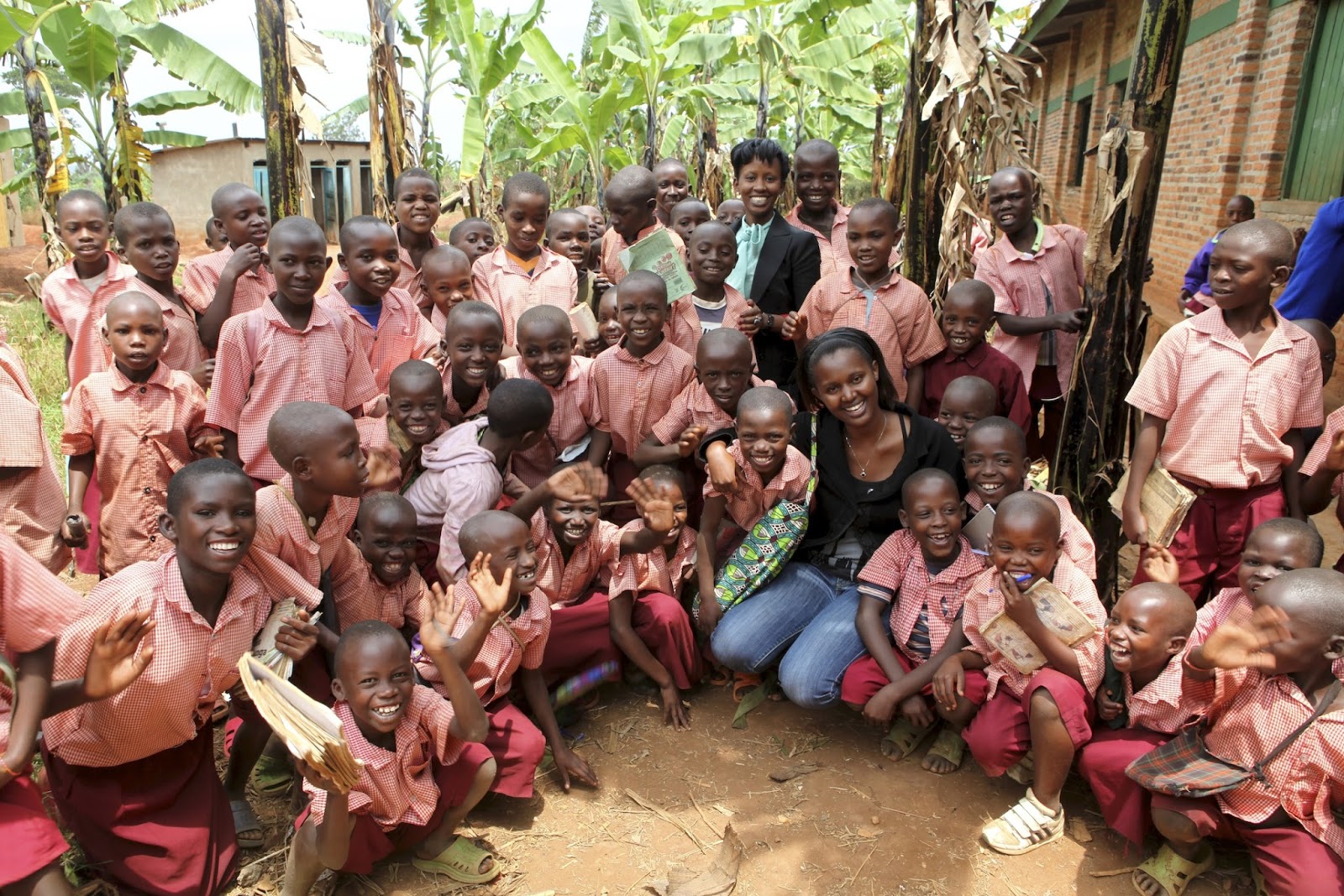
A warm welcome from Gs Gikaya students!

When Nadia, Tash, and I arrived, we were welcomed by kids running towards you to receive you with a hug and sweet songs.

SHE will be providing Menstrual Health Management training at each of our ten pilot schools, but before we begin training, we needed to revisit the school campus so we can tailor our curriculum based on the school’s sanitation facilities. 


Gs Giyaka is equipped with a girls’ room that contains basic materials that a girl should use when she get her menses at school and is unprepared. Because this school is led by a woman, the issues of menstruation seem better well addressed than at other schools. The school teachers discuss the topic after class and instruct younger girls how to manage their menstruation, but challenges to fully support girls’ menstrual needs still exist. 

SHE’s Nadia with Gs Gikaya’s headmistress in the school’s girl’s room


The headmistress reported that even though they have pads in stock to give to a girl who is unprepared when her period arrives, many of girls still don’t have means to purchase a pack of pads by themselves. Therefore, they sometimes try to game the system by having their friends ask for pads on their behalf so they can have enough products. Painkillers are also not available at school, so sometimes the headmistress allow girls to return home if they have too much pain. 

Supporting girls’ menstrual needs at school will not be solved simply by providing access to more pads. That’s why SHE is instigating at the national level to ensure that budgets and resources are increased at the school level, so girls will be provided increased access to education, menstrual products, and services.

I wonder whether schools led by women care more about menstruation issues or if it’s just this school that makes an effort to support its girls and boys equally to help them stay in school. In any regard, we can’t wait to learn more from the girls of Gs Gikaya!


– Gerardine, Marketing and Research Officer